

What is a writing prompt? Your 2026 guide to creativity
You’ve probably heard that writing prompts are just for school assignments or struggling writers. That’s wrong. Writing prompts serve as catalysts for creative thinking, helping anyone generate fresh ideas and build consistent writing skills. This guide breaks down exactly what prompts are, how they boost creativity, and practical ways to use them effectively in your daily practice.
Table of Contents
- What Is A Writing Prompt? Defining The Basics
- How Writing Prompts Boost Creativity And Overcome Blocks
- The Role Of AI And Human Creativity In Using Writing Prompts
- How To Use Writing Prompts Effectively: Strategies And Tips
- Explore Unique Writing Journals And Prompt Collections
Key takeaways
| Point | Details |
|---|---|
| Definition and purpose | Writing prompts are questions or instructions designed to spark creative ideas and overcome mental blocks. |
| Overcoming writer’s block | Prompts provide structured starting points that help bypass the inner critic and generate ideas quickly. |
| Consistency matters | Regular short writing sessions with prompts compound creative skills and improve confidence over time. |
| AI versus human creativity | AI tools can support writing tasks, but human creativity shows greater variability and handles complex tasks better. |
What is a writing prompt? Defining the basics
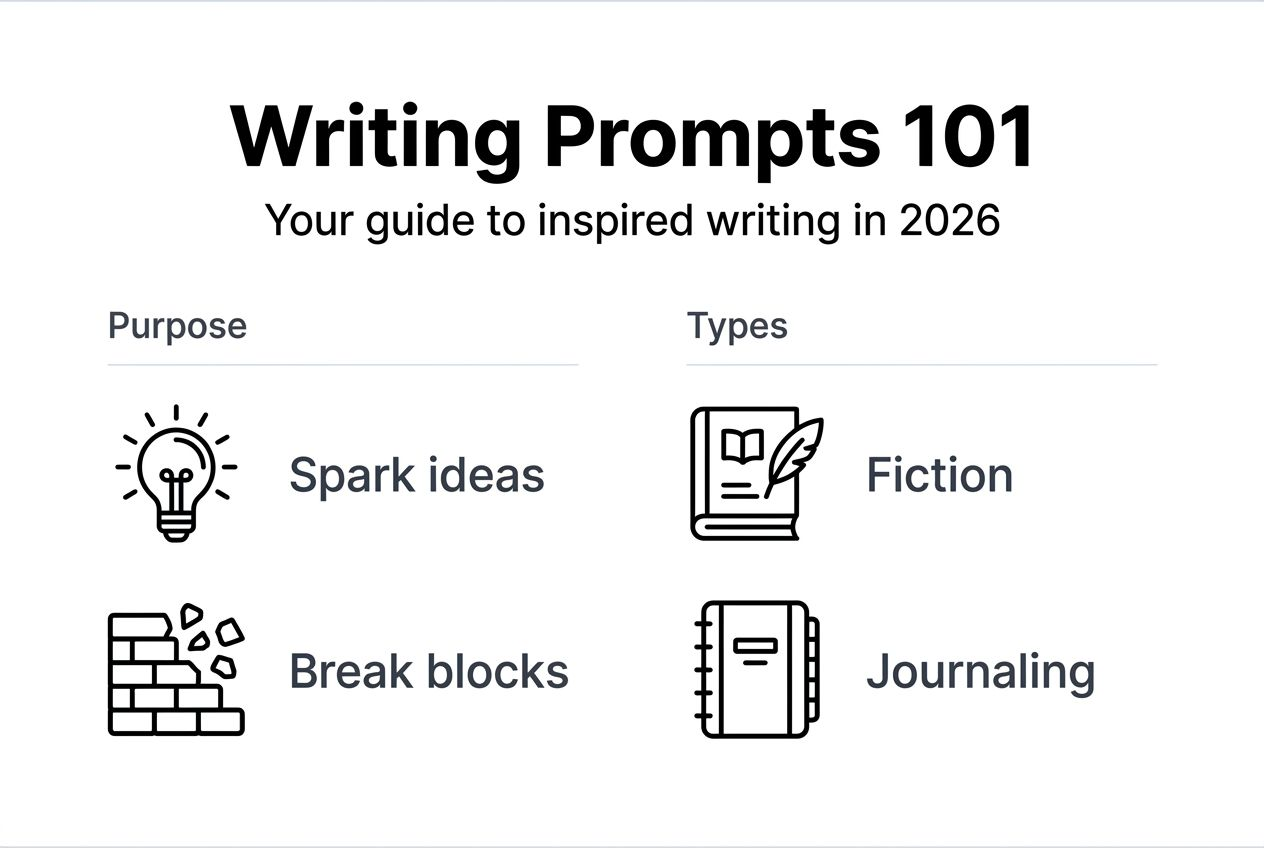
A writing prompt is a question and/or set of instructions you receive about something you’re supposed to write. Instructors and creative writing contexts use prompts to guide your focus and trigger ideas when you’re staring at a blank page.
Prompts take multiple forms depending on your goals:
- Questions that ask you to explore a specific topic or perspective
- Scenarios that place you in imaginary situations requiring creative response
- Images or phrases that inspire visual or emotional connections
- Word lists that challenge you to incorporate specific terms into your writing
The beauty of prompts lies in their adaptability. You can use them for fiction, journaling, poetry, essays, or even professional content. They work equally well for experienced writers seeking fresh angles and beginners building foundational skills. Prompts remove the pressure of inventing everything from scratch, letting you focus on expression rather than invention.
Think of prompts as creative training wheels. They give you direction without dictating your destination. You maintain complete control over tone, style, and where the idea leads. This flexibility makes prompts valuable across every writing genre and skill level.
How writing prompts boost creativity and overcome blocks
Writing prompts provide structured starting points that help you bypass the paralysis of facing a blank page. Your inner critic thrives in uncertainty, but prompts give you immediate direction. When you know what to write about, your brain shifts from anxious questioning to productive exploration.
Timed writing exercises significantly improve idea generation with consistent short practice. Set a timer for 10 to 20 minutes and write continuously without editing. This constraint forces your brain to generate ideas faster than your critic can shut them down.
Research shows measurable creativity boosts from regular prompt practice:
- Increased fluency: You generate more ideas in less time
- Improved flexibility: You explore multiple perspectives on single topics
- Enhanced originality: Your unique voice emerges through repeated practice
- Reduced self-censorship: You learn to write first and judge later
Writer’s block often stems from perfectionism or fear of inadequacy. Prompts eliminate these barriers by making writing feel like play rather than performance. You’re responding to an external trigger, which removes the pressure to be brilliant or original on command.
“Writing prompts serve as catalysts for creative thinking, providing structured starting points to overcome writer’s block.”
Consistent short sessions compound over weeks and months. You’ll notice patterns in what excites you, which topics flow easily, and where you struggle. This self-awareness becomes the foundation for developing your unique voice and style. The adult prompt journal for stress relief offers structured exercises that make this process enjoyable and sustainable.
The role of AI and human creativity in using writing prompts
AI tools change how we interact with writing prompts, but they don’t replace human creativity. AI-powered writing assistants significantly enhance creative writing skills by handling grammar, spelling, and formatting. This frees your cognitive resources for idea generation and storytelling. You spend less time worrying about mechanics and more time exploring creative possibilities.

AI can inspire simple creative tasks like generating prompt variations or suggesting plot twists. However, humans exhibit slightly higher creativity and greater variability than large language models, especially in complex creative tasks. Your experiences, emotions, and unique perspective create connections AI can’t replicate.
Here’s how AI and human creativity intersect in prompt-based writing:
- Use AI for inspiration: Generate multiple prompt variations quickly to find what resonates
- Let humans make meaning: Your interpretation and emotional depth remain uniquely yours
- Combine both for feedback: AI catches technical errors while human readers evaluate emotional impact
- Recognize AI limitations: Algorithms excel at patterns but struggle with nuanced creativity
- Maintain creative ownership: Treat AI suggestions as starting points, not finished products
Collaborative feedback from AI and instructors boosts confidence and skills differently. AI provides instant technical corrections, while human feedback addresses voice, authenticity, and emotional resonance. You need both to grow as a writer.
Pro Tip: Use AI to generate 10 prompt variations, then select the one that sparks genuine curiosity. Let the AI handle brainstorming quantity while you focus on quality selection and execution.
Effective prompt engineering improves outcomes with AI tools, but human creativity determines whether those outcomes feel authentic. You bring context, emotion, and lived experience that no algorithm can replicate. The goal isn’t choosing between AI and human creativity but understanding how each strengthens your writing practice.
How to use writing prompts effectively: strategies and tips
Regular engagement with prompts, even for short sessions, compounds creative skills over time. Consistency matters more than duration. Writing for 15 minutes daily builds stronger habits than hour-long sessions once weekly.
Modify prompts to fit your projects and interests. Adapting prompts shows mastery rather than creative dependence. If a prompt asks you to describe a childhood memory but you’re working on fiction, transform it into a character backstory exercise. This flexibility keeps prompts relevant across different writing goals.
Balance prompt use with independent idea generation to avoid creative dependence:
- Schedule prompt days and free writing days alternately
- Use prompts as warm-up exercises before working on original projects
- Combine multiple prompts to create unique hybrid exercises
- Create your own prompts based on what challenges you personally
Track your progress and reflect to improve skills. Keep a simple log noting which prompts sparked your best work, which felt forced, and what patterns emerge over time. This awareness helps you choose future prompts strategically.
| Effective Prompt Usage | Ineffective Prompt Usage |
|---|---|
| Adapts prompts to personal interests and current projects | Follows prompts rigidly without personal interpretation |
| Uses prompts as creative warm-ups before independent work | Relies exclusively on prompts for all writing ideas |
| Reflects on which prompts yield best results | Completes prompts mechanically without evaluation |
| Combines or modifies prompts for unique challenges | Uses prompts only when completely blocked |
Pro Tip: After completing a prompt, spend five minutes writing about why you made specific creative choices. This meta-reflection accelerates skill development faster than prompt practice alone.
The adult prompt journal for skill-building structures this process with intentional variety and reflection space. You get both the prompts and the framework for maximizing their creative impact.
Over-reliance on prompts can hinder independent idea generation. Use them as training tools, not permanent supports. As your confidence grows, gradually increase the ratio of free writing to prompt-based exercises. The goal is building self-sufficient creativity that doesn’t require external triggers.
Explore unique writing journals and prompt collections
Your creative journey deserves tools that make writing feel exciting rather than intimidating. The adult prompt journal for stress relief combines thoughtful prompts with space for reflection, helping you build consistent creative habits while managing daily stress. Each page invites genuine self-expression without judgment or pressure.

Our writing journals collection offers diverse options for different creative styles and goals. Whether you prefer structured prompts or blank pages for freeform exploration, you’ll find journals that match your creative personality. These aren’t generic notebooks but carefully designed tools that support real creative growth.
Ink & Attitude Co. creates activity books and journals with personality and purpose. We understand that creative expression needs both structure and freedom. Our products work equally well as personal creative outlets or thoughtful gifts for anyone seeking new ways to explore their imagination and reduce stress through writing.
FAQ
What types of writing prompts are best for beginners?
Simple, open-ended prompts that invite personal reflection or description work well for beginners. Genre-neutral prompts like “Describe your favorite place” or “Write about a moment you felt proud” allow easy entry without complex constraints. These prompts let you focus on basic skills like observation and honest expression before tackling more ambitious creative challenges.
Can writing prompts help reduce stress and anxiety?
Regular prompt journaling supports stress relief and self-reflection through structured emotional expression. Writing about your thoughts and feelings creates psychological distance from anxious patterns. Consistent use can reduce anxiety symptoms over time by giving you a safe space to process emotions without judgment.
How can I avoid becoming too dependent on prompts?
Balance prompt usage with free writing exercises where you generate topics independently. Avoid over-reliance by using prompts as springboards, not crutches. Adapt or combine prompts to keep ideas fresh and challenge yourself to modify suggestions rather than following them exactly. This maintains creative independence while still benefiting from external inspiration.
How long should I spend on each writing prompt?
Spend 10 to 20 minutes per prompt for maximum benefit without burnout. Shorter sessions encourage spontaneity and reduce perfectionism. You can always return to promising pieces later for revision. The goal is consistent practice, not polished drafts.
Should I share my prompt-based writing with others?
Sharing depends on your goals and comfort level. If you’re journaling for personal growth, privacy often feels safer. If you’re developing writing skills, selective sharing with trusted readers provides valuable feedback. Start small by sharing one piece with a supportive friend before considering broader audiences.